

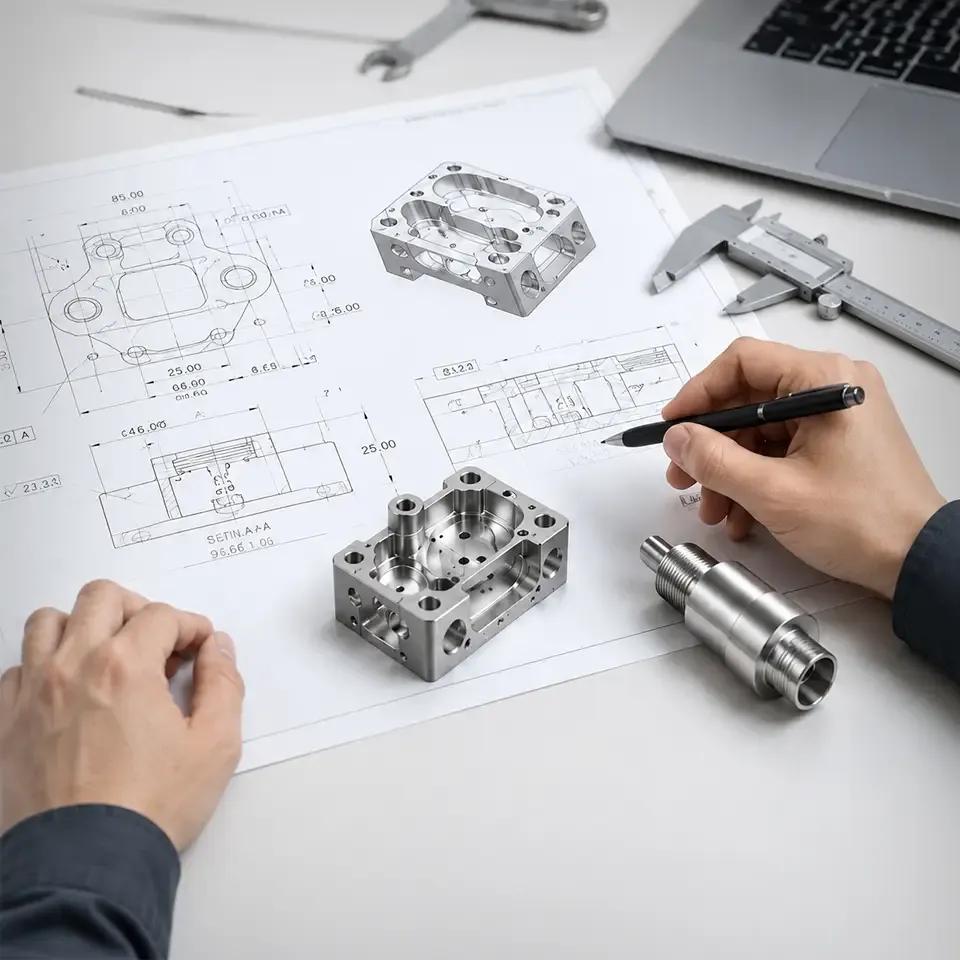
Tight tolerances are an important consideration when manufacturing precision metal parts for mechanical and industrial applications. A tolerance defines the acceptable variation from a specified dimension, allowing manufacturers to determine how accurately a component must be produced. When parts need to fit together precisely or operate within a controlled mechanical system, maintaining appropriate tolerances can have a direct impact on assembly, reliability, and overall performance. Learn more about Precision CNC machining manufacturer.
Why Tolerances Matter
Manufacturing every component to an absolutely exact dimension is generally not practical. Instead, engineers establish an acceptable range around the intended measurement. The tighter the tolerance, the smaller the permitted variation. Components with demanding requirements therefore require careful machining and inspection to ensure their dimensions remain within the specified limits.
For example, a shaft designed to fit inside a bearing may require a controlled diameter so that it can rotate correctly without excessive movement. Similarly, a spacer may need a precise thickness to maintain the correct distance between two components. In both cases, dimensional accuracy contributes to proper assembly and operation.
CNC Machining and Dimensional Control
CNC machining is well suited to applications that require controlled tolerances. Computer-controlled equipment follows programmed machining instructions, allowing cutting operations to be performed with a high level of repeatability. Proper machine setup, cutting tools, workholding, and machining parameters all contribute to dimensional consistency.
Manufacturers also need to consider factors such as material behavior and temperature during machining. Metals can expand or contract under different conditions, while cutting forces can influence the workpiece during certain operations. Experienced machining teams account for these factors when developing production processes.
Inspection and Quality Assurance
Producing a precision part is only one part of the manufacturing process. Inspection is also important for confirming that the finished component meets its specified dimensions. Depending on the part, manufacturers may check features such as diameter, length, thickness, hole position, thread dimensions, and surface characteristics.
Appropriate measuring equipment can help identify dimensional deviations before parts move to the next stage of production. Consistent inspection practices are especially valuable when manufacturing multiple components that must work together within a larger assembly.
Supporting Reliable Components
Tight tolerances can be particularly valuable in industries where components must provide dependable performance. Automotive systems, industrial machinery, electronics, and specialized equipment can all contain parts that require controlled dimensions.
However, tolerances should be selected according to actual functional requirements rather than making every dimension unnecessarily precise. A suitable tolerance balances performance needs with manufacturing efficiency and cost.
Conclusion
Tight tolerances play an important role in producing reliable precision metal parts. Through careful CNC machining, appropriate process control, and thorough inspection, manufacturers can produce components that meet demanding dimensional requirements. Companies such as Maijin Metal can support custom machining projects by manufacturing parts according to specific drawings, tolerances, and application requirements.
Why Tolerances Matter
Manufacturing every component to an absolutely exact dimension is generally not practical. Instead, engineers establish an acceptable range around the intended measurement. The tighter the tolerance, the smaller the permitted variation. Components with demanding requirements therefore require careful machining and inspection to ensure their dimensions remain within the specified limits.
For example, a shaft designed to fit inside a bearing may require a controlled diameter so that it can rotate correctly without excessive movement. Similarly, a spacer may need a precise thickness to maintain the correct distance between two components. In both cases, dimensional accuracy contributes to proper assembly and operation.
CNC Machining and Dimensional Control
CNC machining is well suited to applications that require controlled tolerances. Computer-controlled equipment follows programmed machining instructions, allowing cutting operations to be performed with a high level of repeatability. Proper machine setup, cutting tools, workholding, and machining parameters all contribute to dimensional consistency.
Manufacturers also need to consider factors such as material behavior and temperature during machining. Metals can expand or contract under different conditions, while cutting forces can influence the workpiece during certain operations. Experienced machining teams account for these factors when developing production processes.
Inspection and Quality Assurance
Producing a precision part is only one part of the manufacturing process. Inspection is also important for confirming that the finished component meets its specified dimensions. Depending on the part, manufacturers may check features such as diameter, length, thickness, hole position, thread dimensions, and surface characteristics.
Appropriate measuring equipment can help identify dimensional deviations before parts move to the next stage of production. Consistent inspection practices are especially valuable when manufacturing multiple components that must work together within a larger assembly.
Supporting Reliable Components
Tight tolerances can be particularly valuable in industries where components must provide dependable performance. Automotive systems, industrial machinery, electronics, and specialized equipment can all contain parts that require controlled dimensions.
However, tolerances should be selected according to actual functional requirements rather than making every dimension unnecessarily precise. A suitable tolerance balances performance needs with manufacturing efficiency and cost.
Conclusion
Tight tolerances play an important role in producing reliable precision metal parts. Through careful CNC machining, appropriate process control, and thorough inspection, manufacturers can produce components that meet demanding dimensional requirements. Companies such as Maijin Metal can support custom machining projects by manufacturing parts according to specific drawings, tolerances, and application requirements.